
Hajj Will No Longer Fall in Summer for the Next 25 Years

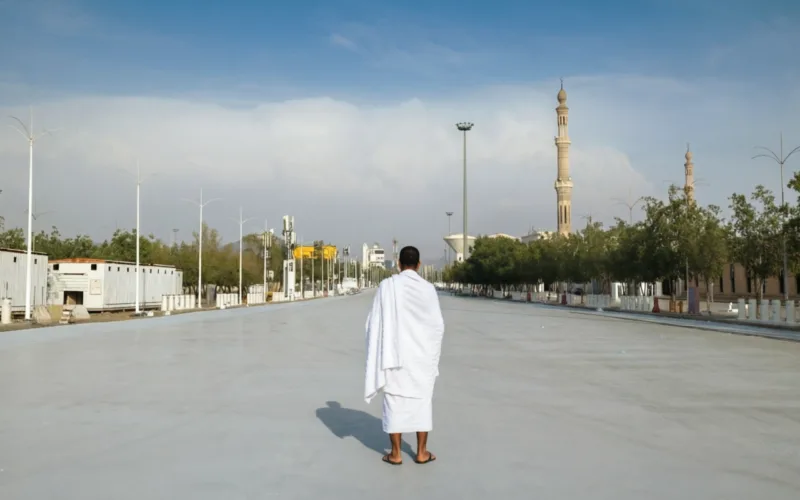
Key Takeaways
- Hajj 2026 opens an eight-year spring phase, followed by eight years in winter, then autumn, before returning to summer around 2050
- The shift is driven by the lunar Hijri calendar moving roughly 11 days earlier each year against the Gregorian calendar
- Cooler conditions are expected to ease the physical strain of pilgrimage, particularly for elderly pilgrims and those with health concerns
Hussein Al-Qahtani, spokesman of Saudi Arabia’s National Center for Meteorology (NCM), says this year’s Hajj marks the final time the pilgrimage will fall in summer for a long time to come.
Starting in 2026, the next eight Hajj seasons will take place in spring, followed by eight in winter, then autumn with gradually climbing temperatures, before returning to summer after roughly 25 years.
Hajj 2026 is expected to take place between 25 and 30 May, placing it firmly in the spring season — in recent years when pilgrims performed rites under temperatures that regularly reached 45 to 47 degrees Celsius at Masjid al-Haram (Grand Mosque) and the surrounding holy sites.
Why Hajj Is Shifting Seasons?
The change is tied to the lunar Hijri calendar, which is approximately 11 days shorter than the Gregorian year. This causes Hajj to shift earlier each season, cycling through different times of year over a roughly 33-year period.
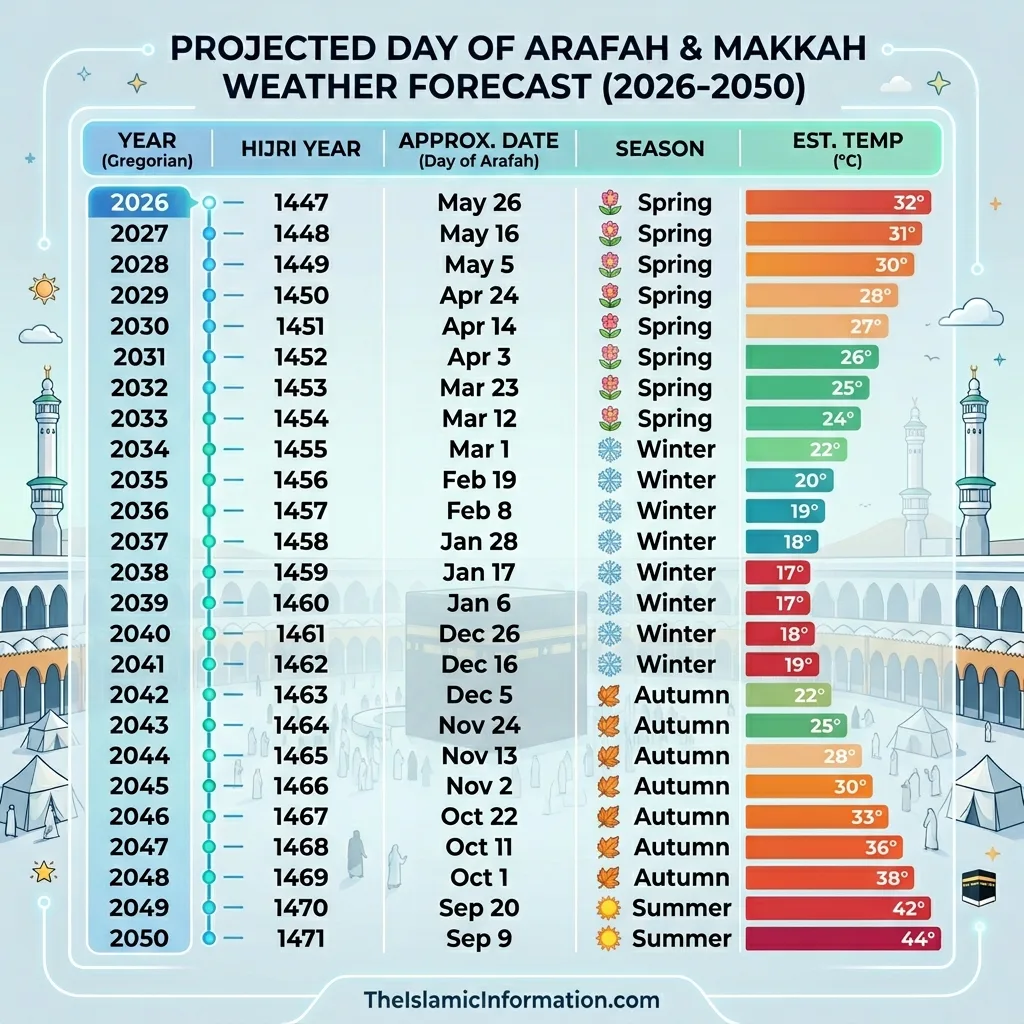
The NCM has published a 25-year Hajj calendar mapping how pilgrimage dates will align with Gregorian seasons through to 2050, giving pilgrims and authorities long-range visibility for the first time.
What It Means for Pilgrims?
The move into spring brings noticeably milder conditions for the millions who travel to Makkah each year to perform rites at Masjid al-Haram (Grand Mosque) and journey to Arafat, Mina, and Muzdalifah.
The seasonal transition is expected to ease the physical demands of Hajj, particularly for the elderly and those with health concerns, while also supporting crowd management, logistics, and safety planning.
The shift does not mean cool weather. Late May in Makkah still brings heat, but conditions are considerably more manageable than peak summer, when temperatures at Masjid al-Haram (Grand Mosque) and Masjid an-Nabawi (Prophet’s Mosque) frequently exceed 45 degrees Celsius.


 WhatsApp Channel
 ChatGPT
 Instagram
 Facebook
 X (Twitter)
 Claude
 Ask Gemini AI
 Ask Grok AI
Support the officially authentic Islamic website.
Support our mission to spread Islamic knowledge. Your donation helps our volunteer writers and infrastructure. Contribute now.

