
Masjid al-Haram Muadhin Ibrahim Al-Madani Passes Away at 51

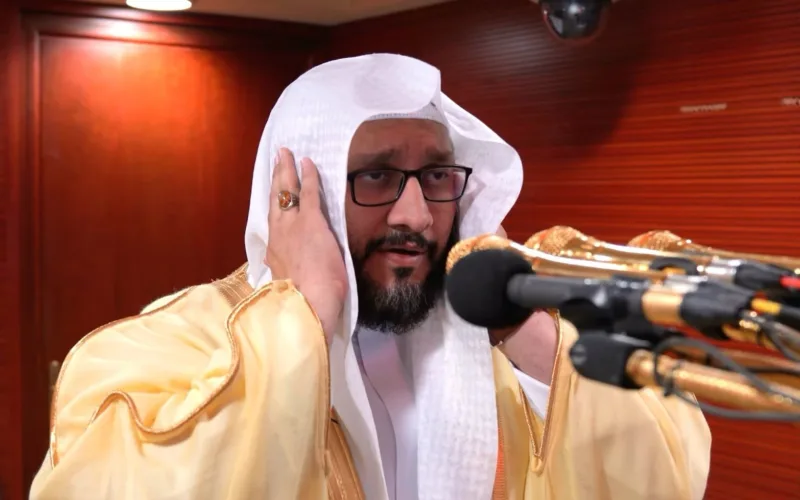
- Sheikh Ibrahim bin Adel Hamzah Al-Madani died at dawn on Monday, 10 Rabi’ al-Thani 1448 AH, at about 51 years of age.
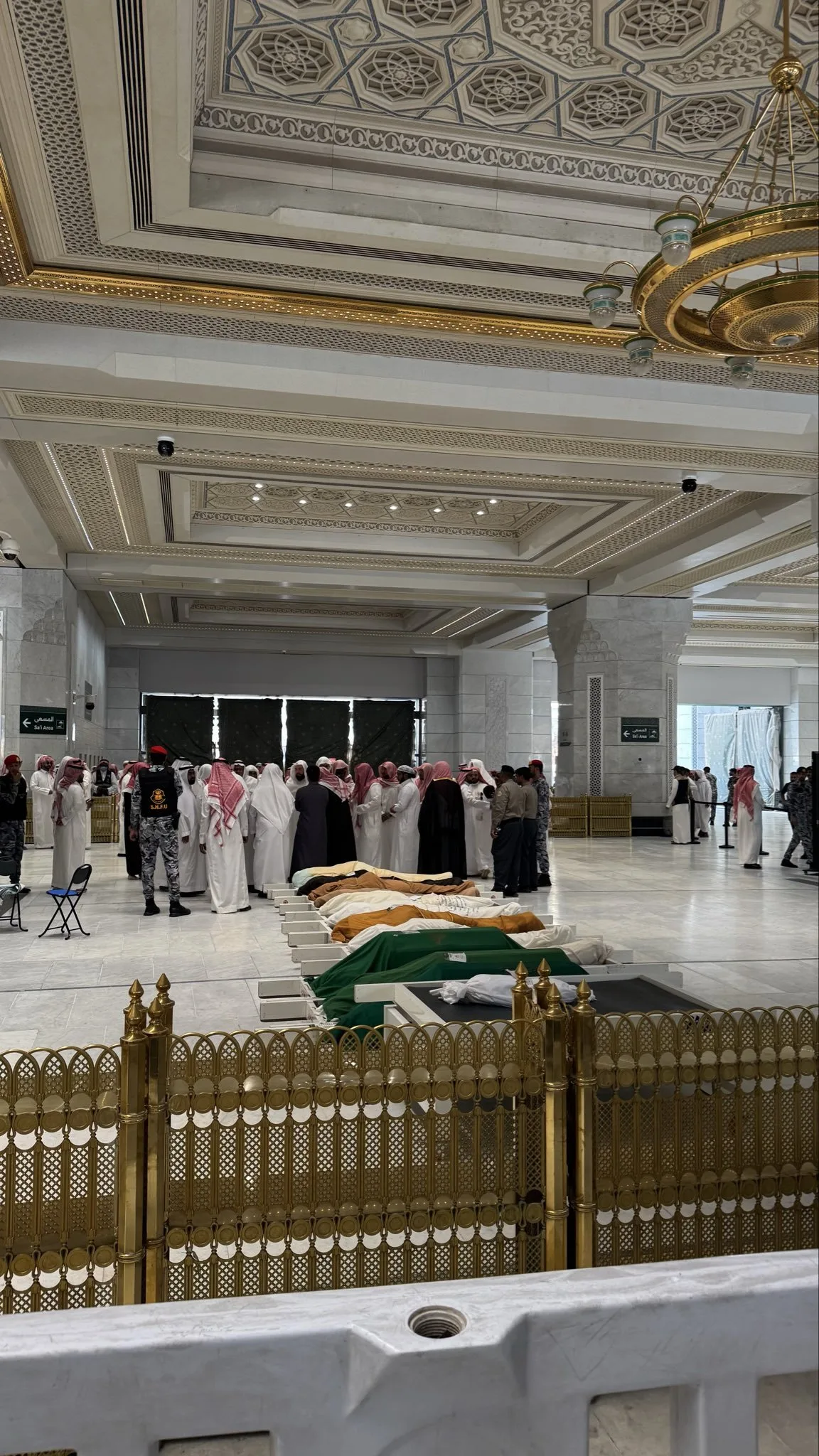
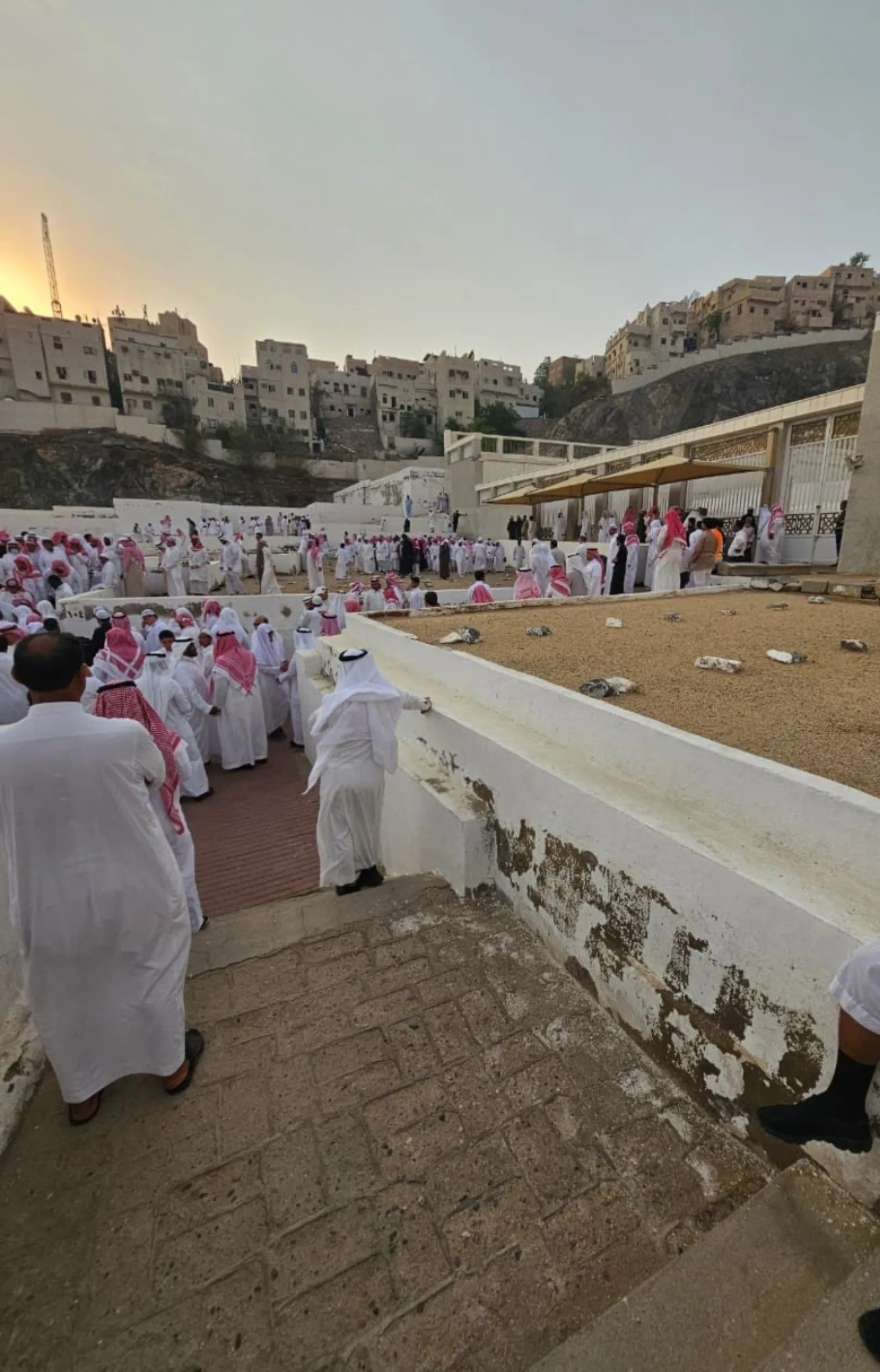
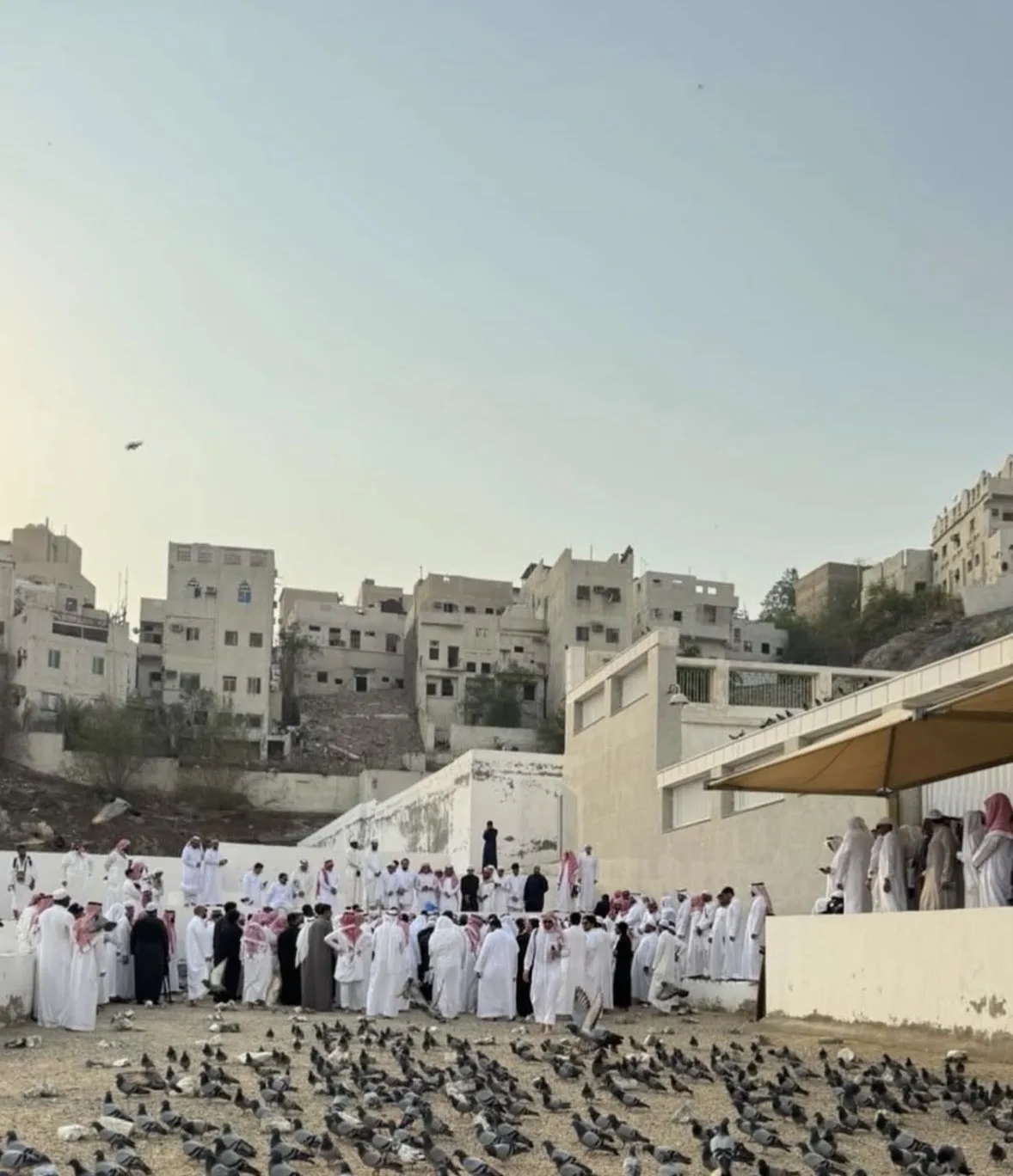
- His funeral prayer was offered after Asr at Masjid al-Haram (Grand Mosque), and he was laid to rest in Al-Mu’alla Cemetery.
- Born in Madinah, he called the adhan from his teens and was appointed a Muadhin of Masjid al-Haram (Grand Mosque) in Ramadan 1439 AH (2018).
Sheikh Ibrahim bin Adel Hamzah Al-Madani, a Muadhin of Masjid al-Haram (Grand Mosque), has passed away. He died at dawn on Monday, 10 Rabi’ al-Thani 1448 AH (21 September 2026), at about 51 years of age. May Allah have mercy on him.
Funeral Prayer and Burial
The funeral prayer was offered after Asr prayer on Monday at Masjid al-Haram (Grand Mosque) by Sheikh Waleed Shamsan. He was laid to rest in Al-Mu’alla Cemetery.
The Last Adhan
Sheikh Ibrahim Al-Madani called his final Adhan on 11 Rabi Al-Awwal 1448 AH (24 August 2026).
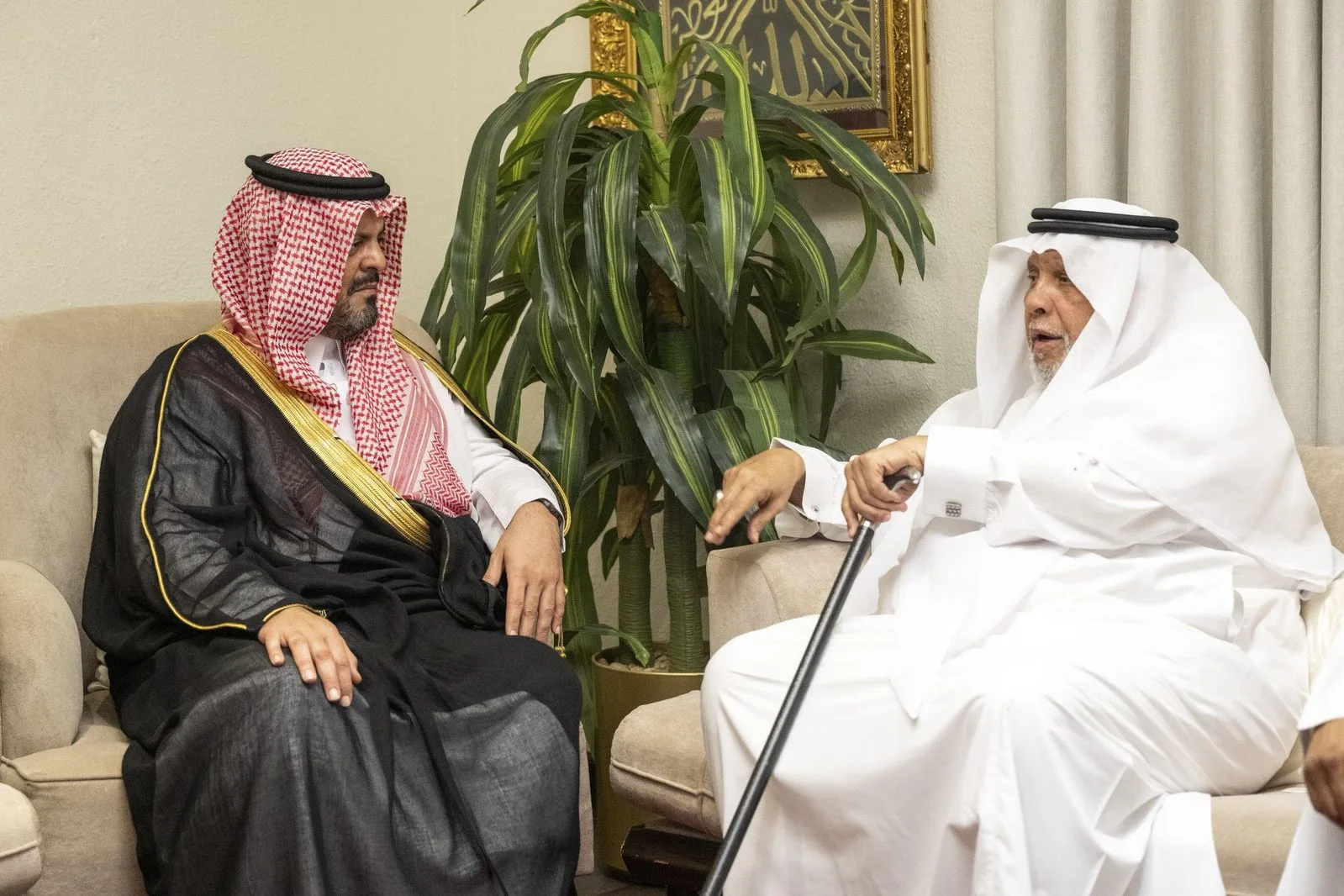
Deputy Governor of Makkah Region Met The Family of Sheikh Ibrahim Al-Madani
Prince Saud bin Mishal bin Abdulaziz, Deputy Governor of the Makkah Region, extended his condolences to the family of Sheikh Ibrahim Al-Madani, the late Muadhin of Masjid al-Haram. He asked Allah Almighty to forgive him, envelop him in His boundless mercy, and grant him a place among the righteous.
King Salman and Crown Prince Mohammed bin Salman Offer Condolences
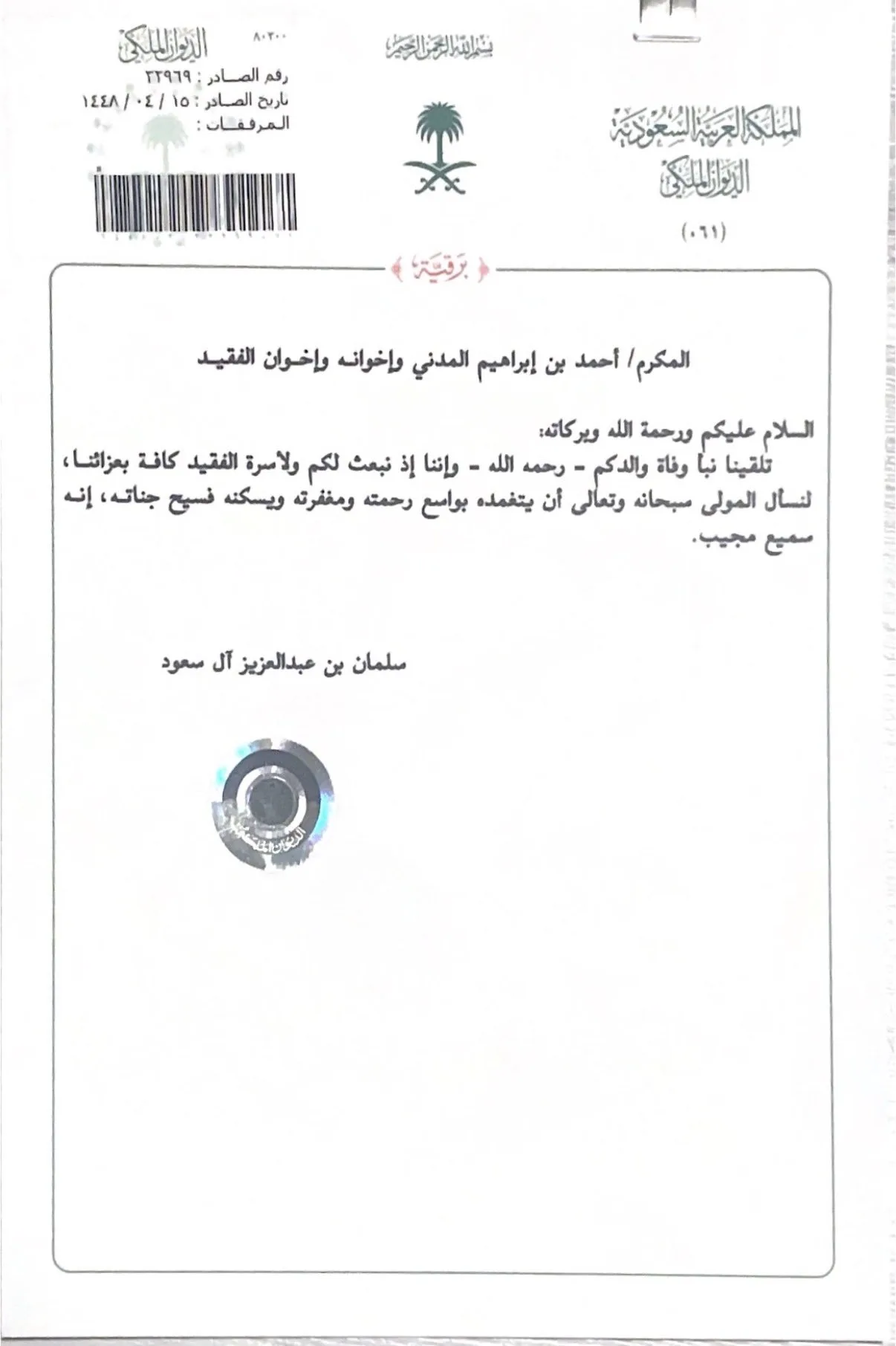
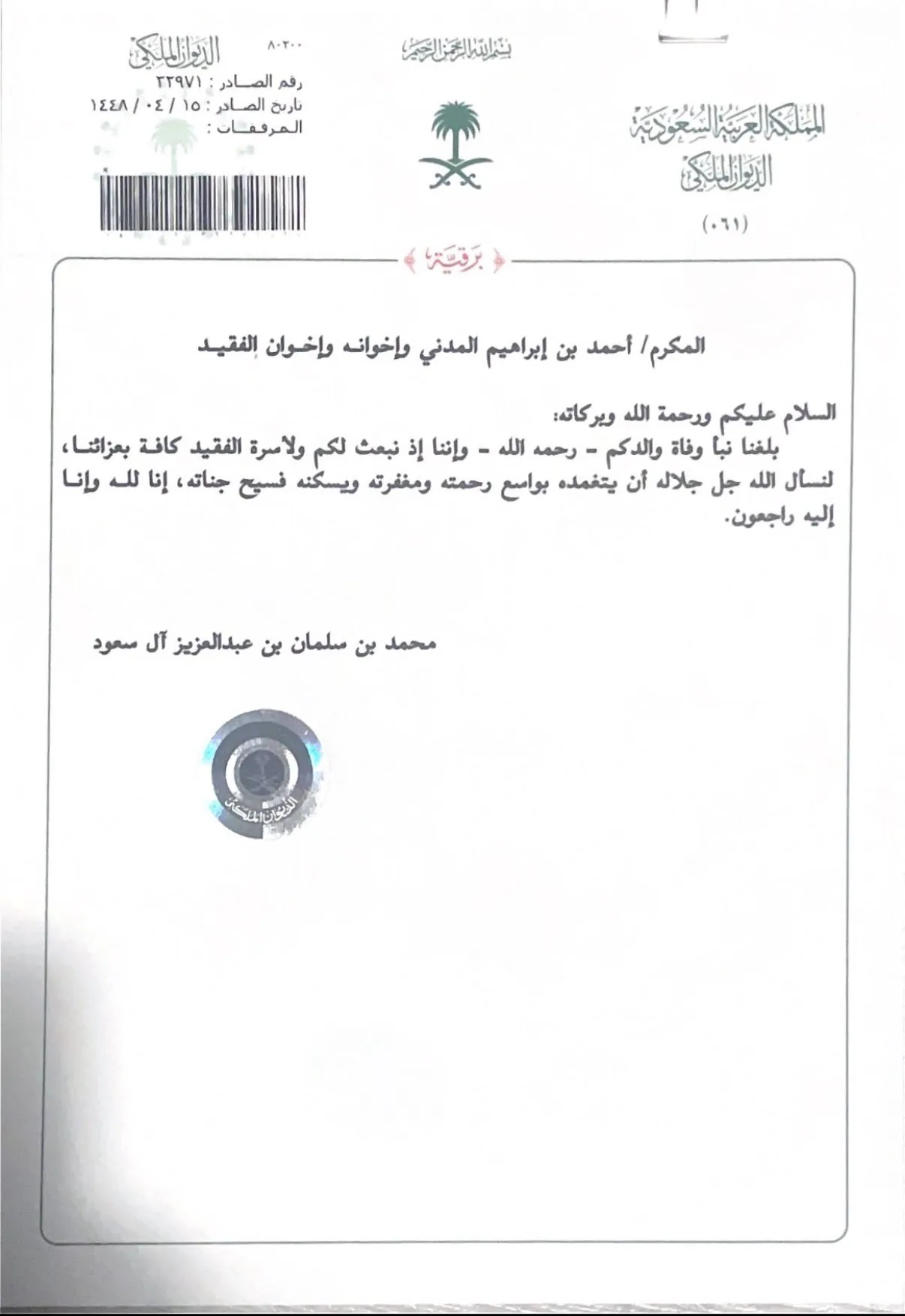
Saudi Arabia’s King Salman bin Abdulaziz Al Saud and Crown Prince Mohammed bin Salman bin Abdulaziz Al Saud sent separate condolence messages to Ahmed bin Ibrahim Al-Madani and his brothers following the death of their father, Ibrahim Al-Madani, a muezzin of Masjid al-Haram.
The official letters, signed by the King and the Crown Prince, convey condolences to the family and prayers that Allah grant the deceased His mercy and forgiveness.
The letters are dated 15 Rabi’ al-Thani 1448 AH, corresponding to September 28, 2026, according to the Saudi Hijri calendar.
Born in Madinah, Raised Around the Qur’an
Sheikh Ibrahim was born in Madinah on 8 Dhul-Hijjah 1397 AH. He grew up in a religious household and later held an academic qualification in Qur’anic Studies. His grandfather was a Hafiz of the Qur’an and shaped his upbringing from an early age.
He began calling the adhan in his teens, at mosques in his neighbourhood. His earliest adhans were in the Egyptian style. Through secondary school and college, he called the adhan in the traditional Madinan style at mosques across the city. For a time he took turns calling the adhan with three of his neighbours, until he finished college.
He later paused for a period because he was teaching outside Madinah. He never served as a Muadhin in Masjid an-Nabawi (Prophet’s Mosque), but he said the city shaped his voice, his style and his love for the adhan.
His Path to Makkah
In 1428 AH, he was invited to return to the adhan at Masjid Al-Maddah, where he continued until his appointment to Masjid al-Haram (Grand Mosque). He was formally appointed a Muadhin there in Ramadan 1439 AH (2018).
He described the move in his own words:
“I spent 43 years of my life in Madinah, but Allah willed that I should become a mu’adhdhin in Makkah. It is an immense blessing, and all praise belongs to Allah.”
Madinan and Makkan Styles of Adhan
Sheikh Ibrahim said the Madinan adhan is known for its gentleness, sweetness and emotional depth. It commonly uses the Bayāt maqām, with longer melodic phrases and more vocal ornamentation. He believed this softness matched the nature of Madinah and its people.
The Makkan adhan has a different character. Its phrases are shorter and stronger, with fewer embellishments, and it carries majesty and reverence before the Ka’bah.
He learned the Makkan style on visits to Makkah with his father. There he met Sheikh Abdul Latif Mulla, a former Muadhin of Masjid al-Haram (Grand Mosque) and a friend of his grandfather. Quoting Sheikh Al-Sha’rawi, Sheikh Ibrahim summed up the difference:
“Makkah is majesty, while Madinah is beauty.”
His First Adhan at Masjid al-Haram (Grand Mosque)
He said no memory affected him more than the first time he was entrusted with the adhan at Masjid al-Haram (Grand Mosque). He could not sleep the night before.
“I remained awake throughout the night. You are about to call the adhān in the Sacred Mosque. Even a mistake or a cough would make a difference. It was an enormous responsibility.”
He was very nervous. When he finished, he praised and thanked Allah, though he did not fully take in what had happened. Later, Sheikh Muhammad Ba Sa’d showed him a video recorded from outside the mosque. It showed thousands of people performing tawaf around the Ka’bah while his voice echoed through the mosque. He wept intensely.
“Who am I for my voice to be raised in the Sacred Mosque? Who am I for the people there to hear my voice? This was Allah’s choice and a gift from Him.”
He also spoke with humility about the honour:
“There are people whose voices are better than mine, and there are people better than me in righteousness and excellence. But that is the grace of Allah, which He grants to whomever He wills.”
Devotion Away From the Microphone
His voice became familiar to millions through the adhan and the Takbeerat of Masjid al-Haram (Grand Mosque). Those who knew him pointed to his worship away from the microphone.
One of the Muadhins of Masjid al-Haram (Grand Mosque) said Sheikh Ibrahim would sometimes stay for days in the Mukabbariyyah, hardly leaving it. He devoted himself to worship there, especially in the last part of the night. Those who knew him described him as a man of remarkable ‘ibadah and closeness to Allah, a testimony given by people who knew him, not only out of grief after his death.
What the Adhan Meant to Him
For Sheikh Ibrahim, the adhan was not a show of vocal skill. He saw it as a sacred responsibility that required truthfulness, trustworthiness and sincerity. A Muadhin, he said, raises his voice to declare the greatest testimony of truth: “I bear witness that there is no deity worthy of worship except Allah, and I bear witness that Muhammad is the Messenger of Allah.”
For that reason, he believed a Muadhin must himself be honest and trustworthy.
Masjid al-Haram in Makkah after the Asr prayer on Monday, September 21, 2026.
Sheikh Waleed Shamsan led the funeral prayer at Masjid al-Haram.
Sheikh Ibrahim Al-Madani was laid to rest at Al-Mu’alla Cemetery in Makkah following the funeral prayer.
His final adhan at Masjid al-Haram was the first Fajr adhan on Monday, September 21, just hours before his death.


 WhatsApp Channel
 ChatGPT
 Instagram
 Facebook
 X (Twitter)
 Claude
 Ask Gemini AI
 Ask Grok AI
Support the officially authentic Islamic website.
Support our mission to spread Islamic knowledge. Your donation helps our volunteer writers and infrastructure. Contribute now.

