
Hajj and Umrah Pilgrims Must Declare Cash or Gold Over SAR 40,000

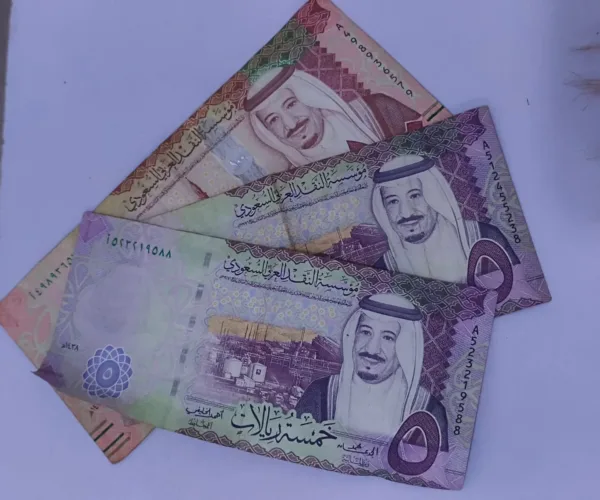
- Saudi Arabia has lowered the mandatory declaration threshold for cash, gold, and jewelry from SAR 60,000 to SAR 40,000.
- The rule applies to every traveler entering or leaving the Kingdom, including Hajj and Umrah pilgrims carrying gold as savings or gifts.
- Customs authorities can seize undeclared valuables for up to 72 hours, even below the threshold, if money laundering is suspected.
Saudi Arabia has lowered its mandatory declaration threshold for cash, gold, and other valuables to SAR 40,000, down from SAR 60,000.
The change applies to travelers entering or leaving the Kingdom carrying cash, gold, jewelry, and other valuables.
The rule falls under updated implementing regulations of the Anti-Money Laundering Law, and applies to gold bullion, precious metals, gemstones, and jewelry.
What Must Be Declared
Travelers must submit a written declaration if they are carrying cash, bearer negotiable instruments, gold bullion, precious metals, gemstones, jewelry, or similar valuables worth SAR 40,000 or more, or the equivalent in foreign currency.
The same rule applies on both arrival and departure.
Why It Affects Pilgrims
The rule is not limited to tourists or business travelers. For tourists, business travelers, expatriates, and religious pilgrims, the policy means more passengers may now be required to complete a customs declaration when traveling with high-value assets.
Pilgrims carrying personal jewelry as savings or gifts now fall under the declaration requirement once the value crosses SAR 40,000, a practice common among Hajj and Umrah travelers from South and Southeast Asia.
How to Declare
Travelers must submit a written customs declaration and provide proof of purchase, such as an invoice, to verify the value of the items.
Cash, bearer negotiable tools, and precious metals at SAR 40,000 or more still require completion at the Customs Declaration Office, even after an electronic declaration.
Penalties and Seizure Powers
The Zakat, Tax and Customs Authority may seize undeclared or falsely declared assets for up to 72 hours if there are suspicions of money laundering or another underlying offence, even where the value falls below the declaration threshold.
Travelers who fail to declare qualifying assets may face fines of between 10 and 25 percent of the value of the seized items for a first offence where no money laundering is suspected.
Suspected money laundering cases are referred to the Public Prosecution and the General Department of Financial Investigations, which may extend the seizure period.
| Detail | Previous Rule | New Rule |
|---|---|---|
| Declaration threshold | SAR 60,000 | SAR 40,000 |
| Applies to | Cash, gold, jewelry | Cash, gold, jewelry, gemstones, monetary instruments |
| Proof required | Purchase invoice (if asked) | Purchase invoice or valuation document |
| Seizure power below threshold | Limited | Up to 72 hours if money laundering suspected |


 WhatsApp Channel
 ChatGPT
 Instagram
 Facebook
 X (Twitter)
 Claude
 Ask Gemini AI
 Ask Grok AI
Support the officially authentic Islamic website.
Support our mission to spread Islamic knowledge. Your donation helps our volunteer writers and infrastructure. Contribute now.

