
Umar Yamaoka: The First Known Japanese Muslim to Perform Hajj in 1909

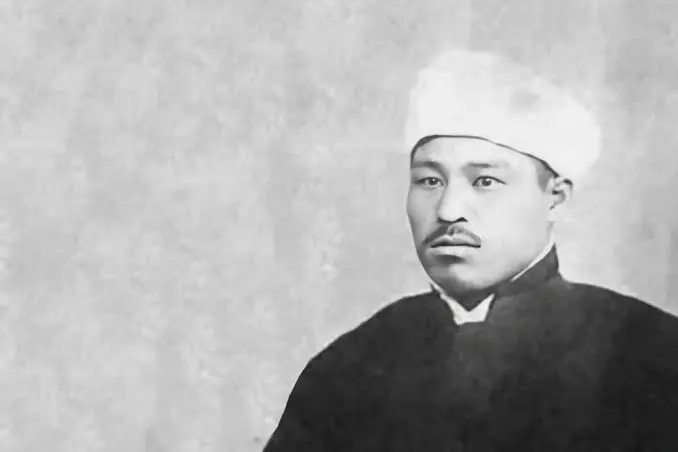
In 1909, Umar Yamaoka left Japan for Mecca to perform Hajj, becoming the first Japanese pilgrim known to have completed the journey. His trip was an important chapter in the early history of Islam in Japan.
Yamaoka travelled alongside Abdurreshid Ibrahim, a Muslim scholar who visited Japan and sought to build stronger connections between the country and the Muslim world. Their journey took place at a time when Islam was still unfamiliar to much of Japanese society.
From Japan to the Holy City of Mecca
Yamaoka’s pilgrimage brought him to one of the most important destinations in the Muslim world. His journey also gave him firsthand experience of Muslim communities and religious life beyond Japan.
He returned to Japan in 1910 and later published a Japanese-language book about his travels in 1912. His account offered Japanese readers a glimpse of Arabia and the holy places he had visited.
His journey came during a period when contact between Japan and Muslim-majority countries was growing. Travellers, scholars and converts helped introduce Japanese society to Islam and its history.
Shōtarō Noda and the Early History of Islam in Japan
Umar Yamaoka was not the earliest Japanese person known to have converted to Islam. That distinction belongs to Shōtarō Noda, according to historical research based on surviving Ottoman records.
Noda was a Japanese journalist who travelled to Istanbul in 1891. During his stay in the Ottoman Empire, he studied Turkish, Ottoman history and Islam. He embraced Islam that year and received the name Abdülhalim.
In a 2007 academic study, researchers Nobuo Misawa and Göknur Akçadağ examined Ottoman Turkish documents to establish Noda’s conversion. Their findings identified him as the earliest Japanese Muslim whose conversion could be confirmed through historical records.
The two men are remembered for different milestones. Noda’s documented conversion dates to 1891, while Yamaoka’s Hajj journey took place in 1909.
A Chapter in Japan’s Muslim History
The stories of Umar Yamaoka and Shōtarō Noda show how early encounters between Japan and the Muslim world helped shape the history of Islam in the country.
Yamaoka’s pilgrimage connected Japan with Mecca, while Noda’s experience in Istanbul provides an earlier documented example of a Japanese person embracing Islam. Both stories remain part of the historical record of Japan’s early engagement with the Muslim world.


 WhatsApp Channel
 ChatGPT
 Instagram
 Facebook
 X (Twitter)
 Claude
 Ask Gemini AI
 Ask Grok AI
Support the officially authentic Islamic website.
Support our mission to spread Islamic knowledge. Your donation helps our volunteer writers and infrastructure. Contribute now.


The stories of Umar Yamaoka and Shōtarō Noda are usually presented as quiet accounts of personal spiritual discovery. Yet the historical record points to a far more entangled political reality—one the article could have illuminated with more context.
Noda’s conversion was not a private theological journey. In 1890, the Ottoman frigate Ertuğrul sank off Japan’s coast, and Noda, a Jiji Shinpo journalist, accompanied the survivors back to Istanbul to deliver relief funds. At Sultan Abdülhamit II’s explicit request, he stayed on, teaching Japanese to Ottoman officers and moving within the imperial capital’s inner circles. His Islam took shape amid a Meiji–Ottoman diplomatic exchange, not through a solitary search for faith.
Yamaoka’s 1909 Hajj, likewise, was not a solitary pilgrimage. Abdul Rashid Ibrahim, a Russian-born Tatar Muslim and pan-Islamic activist, guided him and viewed Japan as a potential counterweight to European empires. The article calls Yamaoka the “first Japanese pilgrim” but erases the transnational broker who converted him in Bombay and gave the journey geopolitical significance.
Even the framing of who was the “first Muslim” is more contested than the article suggests. The title has been variously given to Noda, Torajiro Yamada, and Bumpachiro Ariga, who embraced Islam in India around the same period—a historiographical dispute that Ottoman Turkish records have deepened, not resolved.
Most significantly, the article leaves unaddressed the fact that, from the 1900s onward, Japanese engagement with Islam became part of imperial strategy. The Kaikyō Seisaku—Japan’s Islam policy—was not simply a story of spiritual exchange, but a geopolitical program that mobilised Muslim populations in Manchuria and across Asia against Soviet and Chinese influence. Intelligence officers and émigré networks actively fostered Muslim communal solidarity in service of state interests.
The article offers biography without the state, encounter without empire. Yamaoka and Noda were not simply pious individuals who found Islam; they were embedded in a Meiji–Istanbul axis, a pan-Islamic network, and an emerging imperial machinery that treated Islam as an instrument of national power. Including that context would have transformed a pleasant anecdote into a genuinely illuminating history.