
Temperature Around the Kaaba Remains at 24°C Even in Peak Summer Heat

Key Takeaways
- Masjid al-Haram has the world’s largest mosque cooling system, with a total capacity of 155,000 refrigeration tons
- Two dedicated stations — Al-Shamiyah and Ajyad — run 24 hours a day to maintain indoor temperatures between 22°C and 24°C
- The system’s air purification technology removes 95% of airborne impurities before releasing air into the mosque
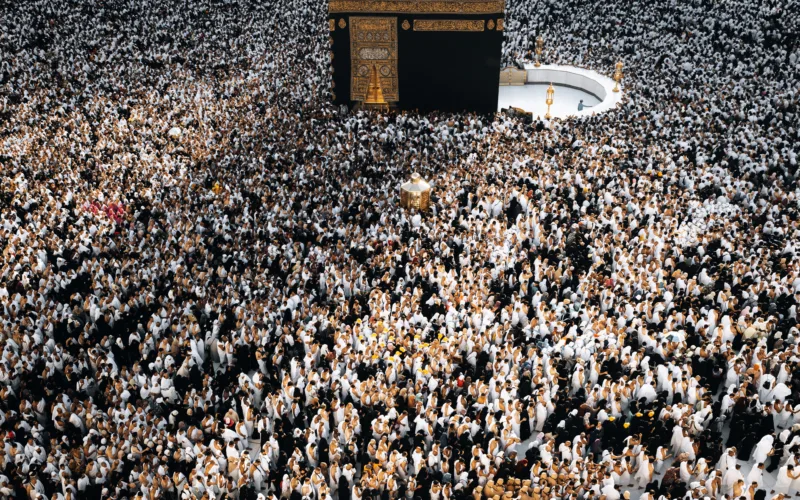
Makkah’s summer temperatures regularly exceed 45°C. Inside Masjid al-Haram (Grand Mosque), pilgrims and worshippers experience something entirely different — a consistent indoor climate that never rises above 24°C.
That comfort does not happen by chance. It is the product of the world’s largest cooling infrastructure dedicated to a single religious site.
Two Stations, One Giant Network
The General Authority for the Care of the Affairs of the Grand Mosque and the Prophet’s Mosque operates the system through two main cooling stations: the Shamiya station, with a capacity of 120,000 refrigeration tons, and the Ajyad station, with 35,000 tons.
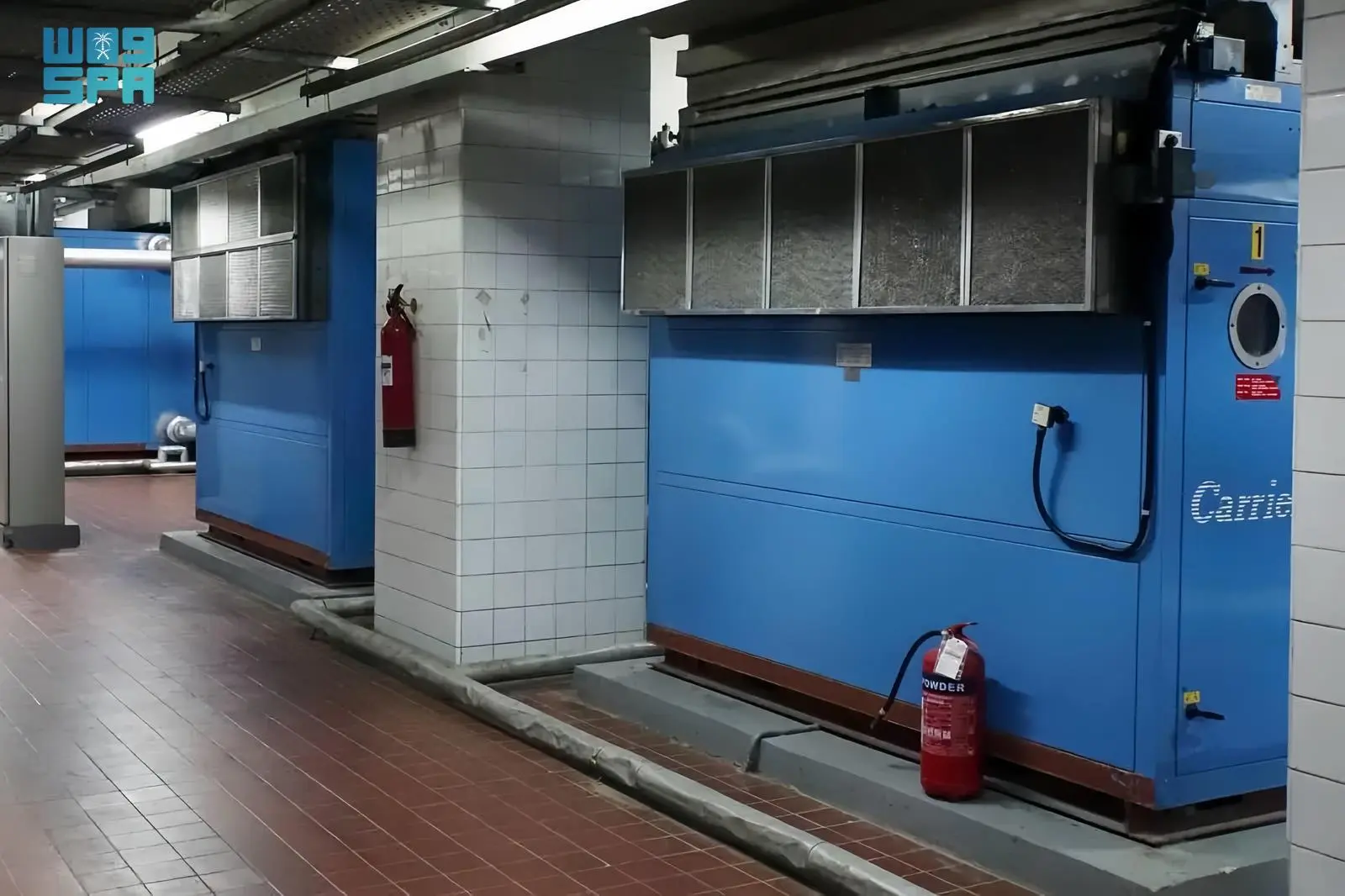
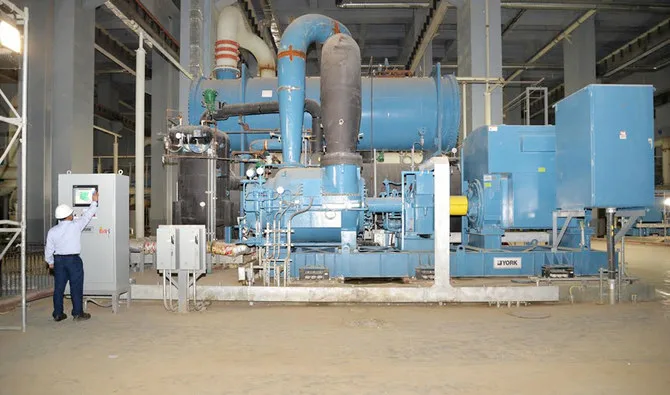
Together, they form a combined capacity of 155,000 refrigeration tons — enough to serve the entire 1.5 million square metres of the mosque complex, including courtyards, walkways, and prayer areas.
The system runs around the clock, maintaining a consistent indoor temperature between 22°C and 24°C even during peak summer heat. Backup cooling infrastructure sits alongside the main stations to ensure temperatures remain stable if any technical issue arises.
Air Purification Built Into the System
Cooling is only part of what the system does. Advanced purification technologies are integrated into the network, capable of removing 95% of airborne impurities to maintain air quality for pilgrims throughout the year.
The air filtration process runs in three stages: air is drawn into filters using fans, pollutants and particles are captured, and clean air is then pushed back into the mosque’s spaces.
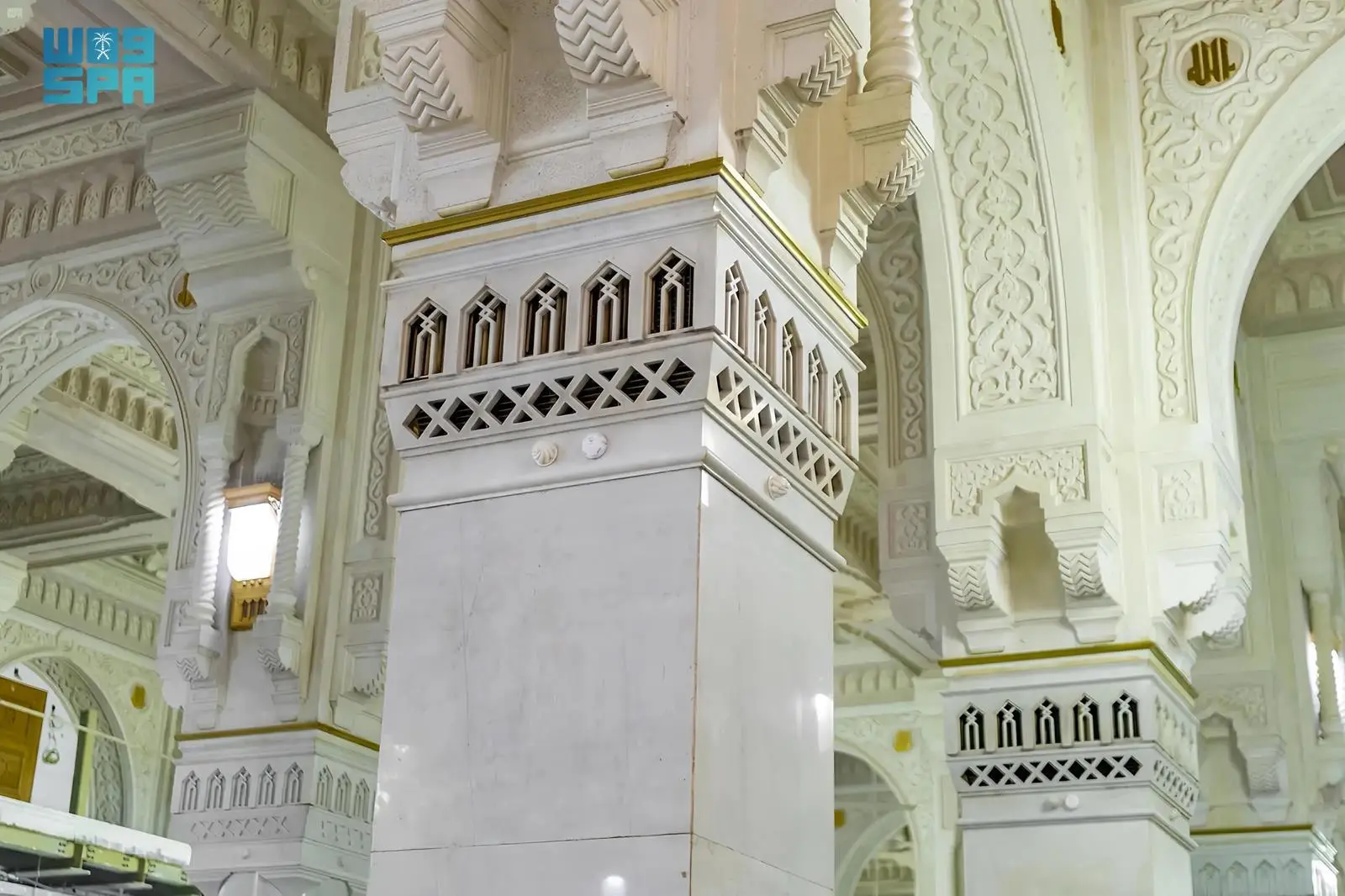
The system’s design accounts for the massive swings in crowd size that Masjid al-Haram (Grand Mosque) experiences throughout the year.
The heating, ventilation, and air conditioning setup was engineered in proportion to the crowd patterns seen across the year, with particular attention to peak seasons during Ramadan and Hajj.
Air handling units monitor temperatures, maintain moisture levels, and adjust airflow across different areas of the complex depending on how many people are present at any given time.


 WhatsApp Channel
 ChatGPT
 Instagram
 Facebook
 X (Twitter)
 Claude
 Ask Gemini AI
 Ask Grok AI
Support the officially authentic Islamic website.
Support our mission to spread Islamic knowledge. Your donation helps our volunteer writers and infrastructure. Contribute now.

