
Manufacturing of the Kaaba’s Kiswah for 1448 AH Has Been Successfully Completed

Key Takeaways
- The Kiswah for 1448 AH is produced at the King Abdulaziz Complex for the Holy Kaaba Kiswah in the Umm Al-Joud district of Makkah
- Each Kiswah takes up to 10 months to complete and involves nearly 200 skilled specialists
- The cloth is made from approximately 670 kg of black-dyed raw silk, decorated with around 120 kg of 21-carat gold thread and roughly 100 kg of silver thread
The Holy Kaaba’s Kiswah for 1448 AH has been completed at the King Abdulaziz Complex for the Holy Kaaba Kiswah, located in the Umm Al-Joud area of Makkah, approximately 17 kilometres from the city centre. Each Kiswah takes up to 10 months to complete, with nearly 200 skilled specialists involved — embroiderers, weavers, technicians, designers, and tailors.
What Goes Into the Kiswah
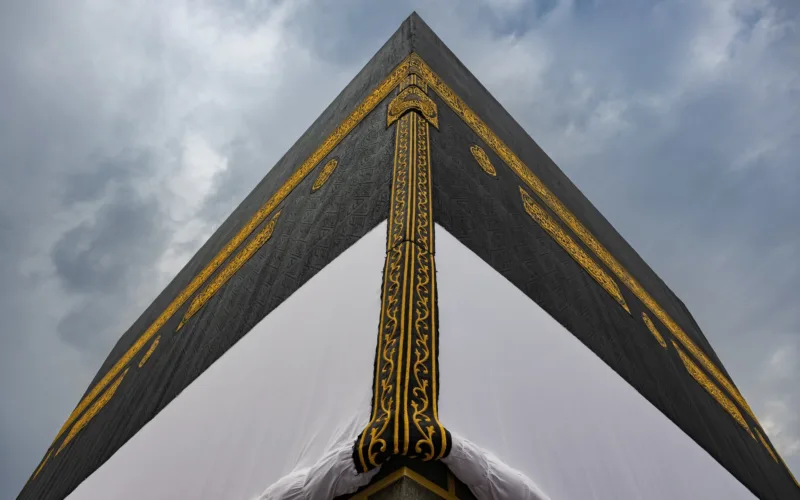
Each Kiswah is made using approximately 670 kg of black-dyed raw silk, then decorated with Quranic verses embroidered with about 120 kg of 21-carat gold thread and roughly 100 kg of silver thread.
The finished cloth is made up of 47 intricately woven pieces of black silk and carries 68 verses from the Quran, embroidered using silver threads plated with 24-carat gold. The total weight reaches approximately 1,415 kilograms.
Seven Stages of Production
The manufacturing process follows seven main stages: water purification, silk washing, black dyeing, weaving, geometric printing of Quranic verses, embroidery with gold and silver threads, and final assembly and inspection.
Each finished panel is stitched individually before being assembled into a complete Kiswah set, which is then handed over to the management of Masjid al-Haram (Grand Mosque) around nine days before the replacement ceremony.
When Will It Change?
The Kiswah is replaced annually on the first day of Muharram, the opening of the Islamic new year. The ceremony involves the removal of lanterns, chandeliers, and fixed ornaments from the Kaaba’s covering, followed by the lowering of the curtain over the door of the Honoured Kaaba.
The tradition of producing the Kiswah in Saudi Arabia dates to 1927, when it was established with the approval of King Abdulaziz, ending the practice of importing it from overseas. The complex officially began operations in 1977.


 WhatsApp Channel
 ChatGPT
 Instagram
 Facebook
 X (Twitter)
 Claude
 Ask Gemini AI
 Ask Grok AI
Support the officially authentic Islamic website.
Support our mission to spread Islamic knowledge. Your donation helps our volunteer writers and infrastructure. Contribute now.

