
Saudi Arabia Bans In-Flight Power Bank Charging on All Flights

Key Takeaways
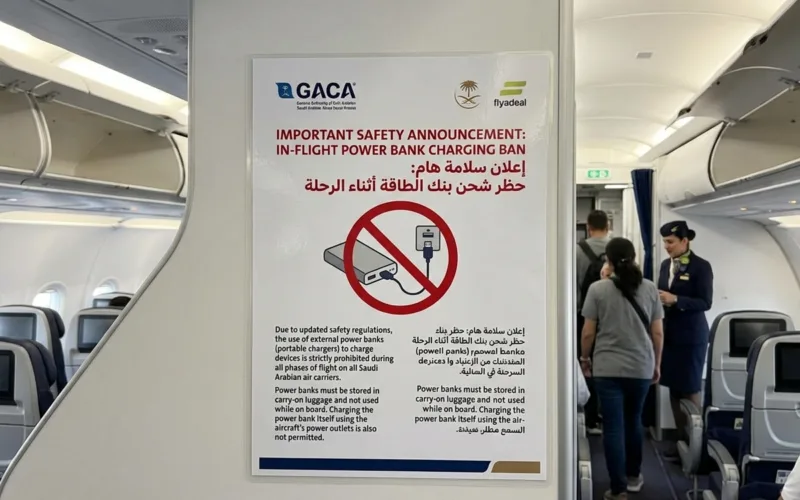
- Saudi Arabia’s aviation regulator has banned the recharging of power banks during flights
- Passengers may carry a maximum of two power banks, which must stay in cabin baggage
- The rules bring Saudi Arabia in line with ICAO’s updated global standards, effective March 2026
Saudi Arabia’s General Authority of Civil Aviation (GACA) has updated the rules for carrying and using power banks on flights operating at Saudi airports.
The changes bring the Kingdom in line with new international specifications from the International Civil Aviation Organization (ICAO), which took effect on 27 March 2026.
What the New Rules Say
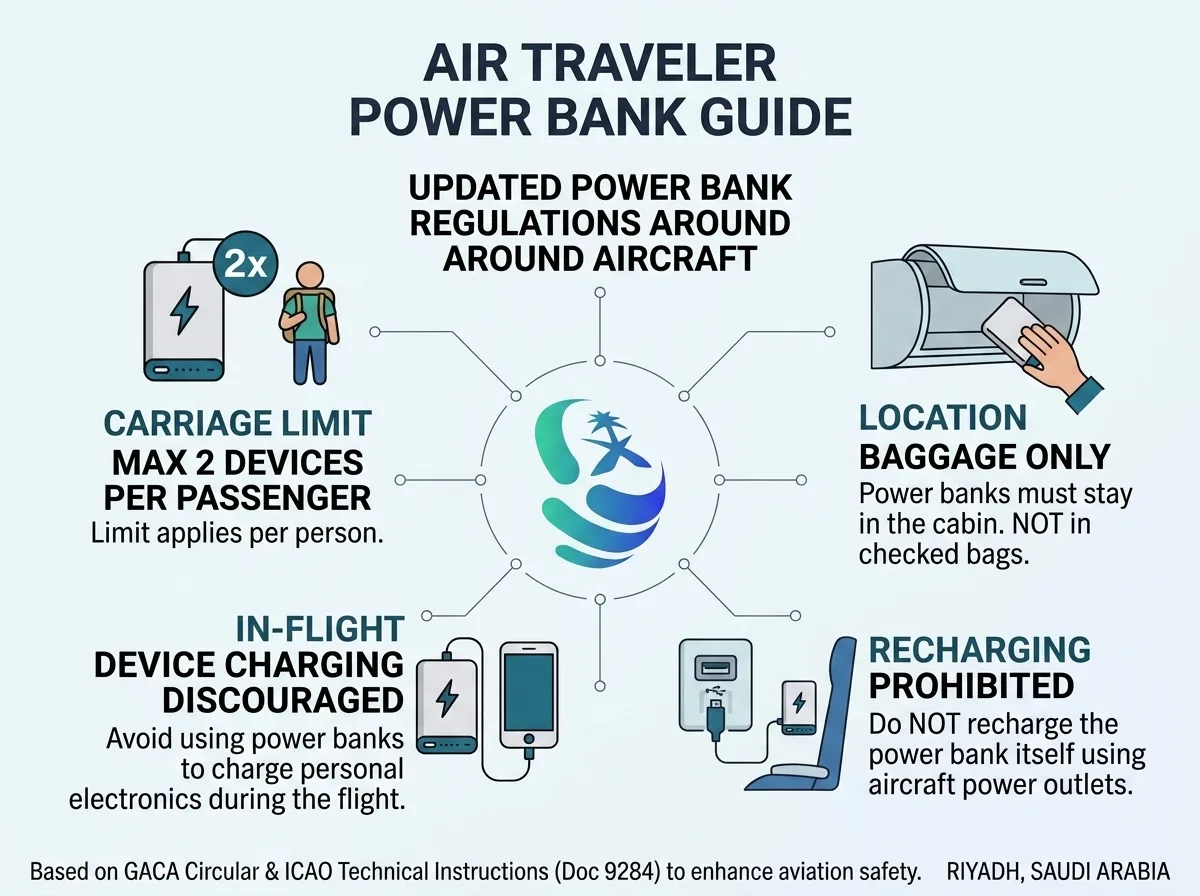
Passengers are now prohibited from recharging power banks while onboard an aircraft. Using a power bank to charge other personal devices during a flight is also discouraged.
Each traveller may carry no more than two power banks, and the devices must be kept in carry-on baggage inside the cabin — they cannot be placed in checked luggage.
GACA said the rules are designed to reduce the risks posed by lithium batteries in aircraft cabins, in line with the ICAO’s Technical Instructions for the Safe Transport of Dangerous Goods by Air.
Why Power Banks Are Restricted
Lithium battery-powered devices present emerging safety risks aboard aircraft. The ICAO’s updated specifications address these concerns, with crew members remaining permitted to carry and use power banks according to the operational requirements of their aircraft.
GACA’s Broader Enforcement Record
The new power bank rules come as GACA tightens oversight across Saudi Arabia’s aviation sector. The authority recorded 609 violations in 2025, with financial penalties totalling more than SR13.8 million ($3.6 million) issued against airlines, companies, and individuals found in breach of civil aviation regulations.
Of those violations, 404 involved airlines failing to follow GACA instructions, resulting in fines exceeding SR6.7 million. A further 136 violations related to breaches of passenger rights protections, with penalties of more than SR5 million.
Additional violations covered licensed aviation companies, drone operators, passengers accused of misconduct onboard, breaches of safety procedures, and the submission of false information during licensing processes.


 WhatsApp Channel
 ChatGPT
 Instagram
 Facebook
 X (Twitter)
 Claude
 Ask Gemini AI
 Ask Grok AI
Support the officially authentic Islamic website.
Support our mission to spread Islamic knowledge. Your donation helps our volunteer writers and infrastructure. Contribute now.

