

Key Takeaways
- No construction timeline has been announced and no official site has been confirmed, though previous plans pointed to the Al-Faisaliyah project area between Makkah and Jeddah.
- RCMC CEO Eng. Saleh Al-Rasheed confirmed the airport plans in an interview with Harvard Business Review Arabia in the February–March 2026 issue.
- Feasibility studies with full international specifications have been completed and strategic, economic, and investment directions formally approved.
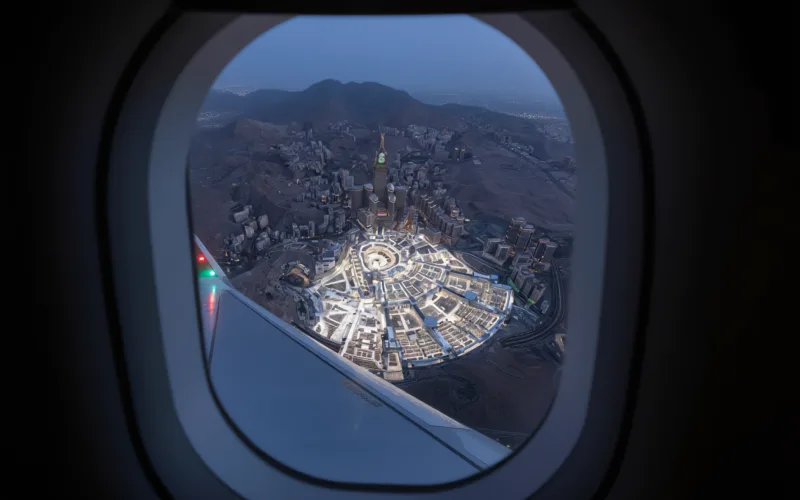
The Royal Commission for Makkah City and Holy Sites (RCMC) has officially confirmed plans for an international airport serving Makkah al-Mukarramah.
RCMC CEO Eng. Saleh Al-Rasheed made the announcement in an interview with Harvard Business Review Arabia in its February–March 2026 issue — the most authoritative statement ever made on the subject, coming directly from the head of the body responsible for Makkah’s development.
What Has Been Confirmed?
In-depth feasibility studies for a Makkah airport built to full international specifications have been completed. The strategic, economic, and investment directions for the project have been formally approved.
The RCMC will partner with the private sector to determine the best investment and operating model for the airport going forward.
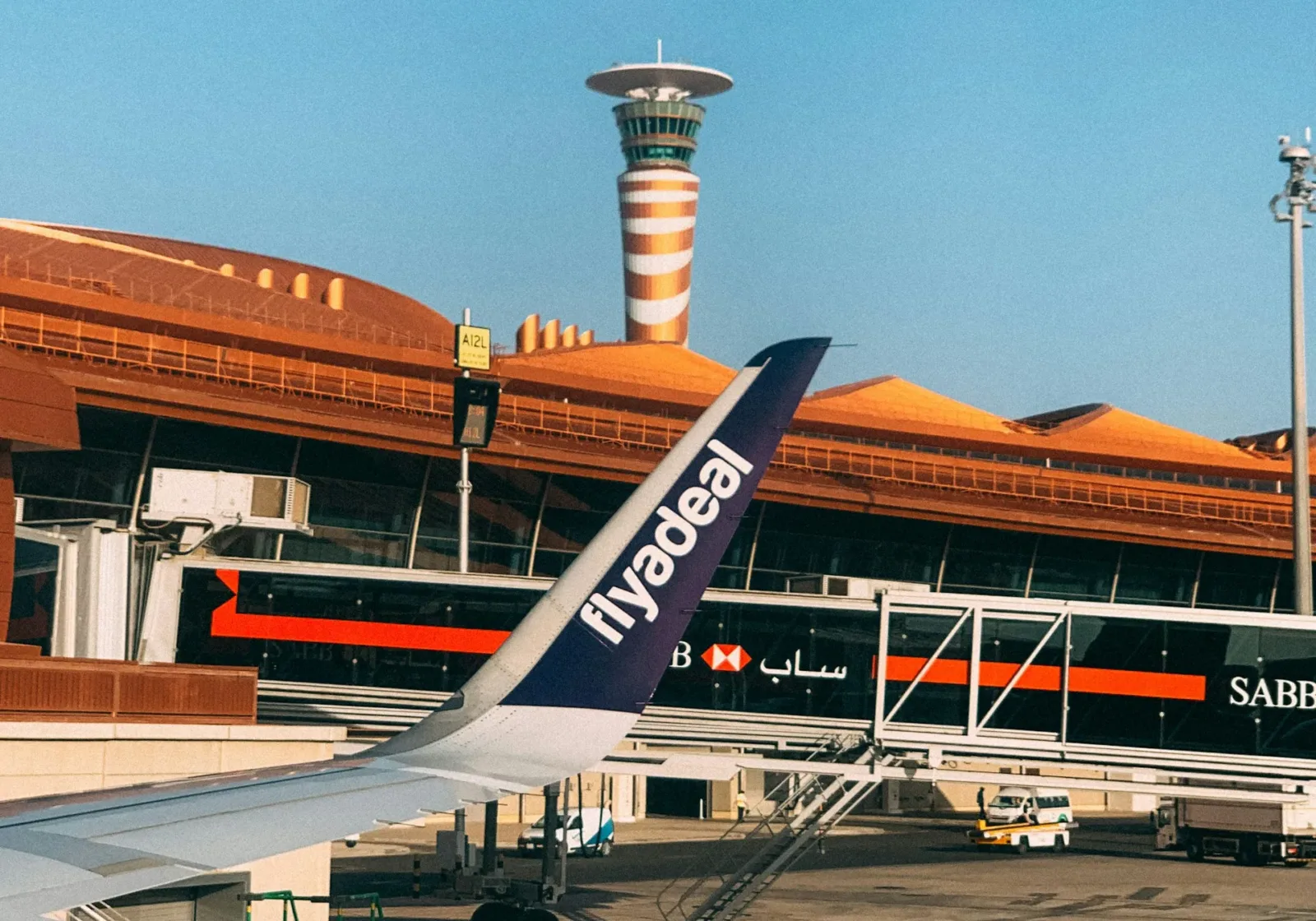
The airport is designed to serve both Makkah residents and the millions of Hajj and Umrah pilgrims who visit the holy city each year — while explicitly ensuring it does not negatively affect the economic viability of nearby King Abdulaziz International Airport in Jeddah.
For decades, the idea of a Makkah airport was officially rejected by Saudi aviation authorities, Religious restrictions have long prevented airport construction within the holy city’s boundaries, as aircraft are not permitted to fly over the Kaaba.
Currently, pilgrims arriving by air must travel approximately 80 to 90 kilometres from King Abdulaziz International Airport in Jeddah to reach Makkah — a journey that adds time, cost, and logistical complexity to what is already one of the most demanding travel experiences in the world.
Where It Might Be Built?
No official site has been confirmed.
To be noted, the airport will not be in the limits of Haram.
However, previous announcements dating back to 2019 pointed to the Al-Faisaliyah project — a planned new city being developed between Makkah and Jeddah — as a likely location.
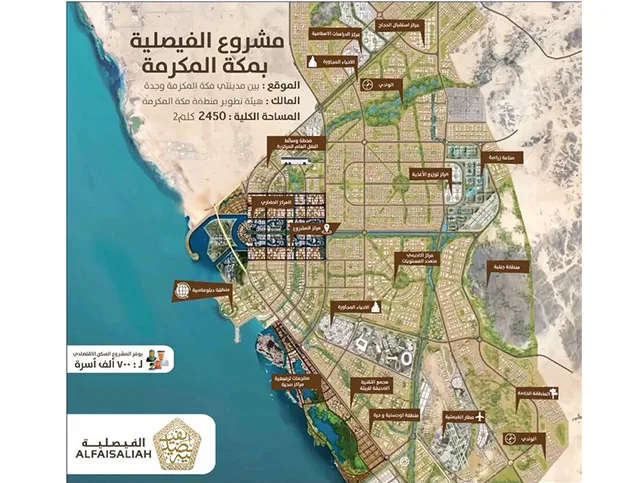
Al-Faisaliyah is described as an extension of Makkah city — starting from the holy city’s legal boundary and ending at the western shoreline.
Beyond the airport and seaport, the development will serve as headquarters for all government entities in the Makkah region, forming a fully integrated urban and infrastructure project rather than a standalone airport development.
Prince Khalid Al-Faisal had announced plans for a major new development west of Makkah that will include an international airport and a seaport as part of the Al-Faisaliyah project.
Public discussion has also suggested areas south or southwest of Makkah as possible sites.
Strong emphasis is expected on integrating the airport with the Haramain High-Speed Rail, tram, and bus networks to create a seamless connection between the airport and the holy sites.
Still in Early Stages
While studies are complete and directions approved, the project remains in its early planning and investment phase. No construction timeline has been announced.
The airport fits within Saudi Arabia’s Vision 2030 goals of expanding pilgrim capacity and improving connectivity to the Holy City, as the Kingdom works toward hosting 30 million Umrah visitors annually by 2030 — a target that makes direct airport access to Makkah increasingly critical.
For pilgrims, a future airport in this location would dramatically reduce travel time compared to the current 80 to 90 kilometre journey from King Abdulaziz International Airport in Jeddah.
Strong integration with the Haramain High-Speed Rail, tram, and bus networks is expected to form a key part of the connectivity plan.
More Developments
Development projects include upgrading eight Arafat sites (190,000 sq m), establishing two-story tents (33,000 sq m), developing 10 residential towers (27,000 pilgrims), and building a 200-bed emergency hospital in Mina.
This includes predictive systems for crowd flow at the Jamarat Bridge and central areas, as well as aerial imaging integrated with the “Balady” application to enhance the pilgrim experience.
The “Smart Makkah” program uses AI to monitor and manage crowd movement in the Grand Mosque and its surroundings.
Al-Rasheed highlighted transport improvements, including advancements in buses, taxis, and guided transport, and the launch of “Makkah Taxi” with modern vehicles, tracking systems, electronic payment options, and electric and hybrid models.
Al-Rasheed said these developments will support the private sector, including the West Jamarat station, which will complete Tawaf Al-Ifadah in 20 minutes and accommodate 20,000 passengers per hour. Six new public markets and upgrades to three existing ones will also be developed.


 WhatsApp Channel
 ChatGPT
 Instagram
 Facebook
 X (Twitter)
 Perplexity
 Ask Gemini AI
 Ask Grok AI
Support the officially authentic Islamic website.
Support our mission to spread Islamic knowledge. Your donation helps our volunteer writers and infrastructure. Contribute now.

