

Key Takeaways
- The Madinah Health Cluster is using smart watches to monitor the vital signs of heart patients performing Hajj 2026 in real time
- The watches track heart rate, ECG, blood oxygen, blood pressure, and movement, with data fed directly to digital monitoring rooms and virtual clinics
- The programme runs under the initiative “Rafiq Rihltak Bil-Hajj” (Your Hajj Journey Companion), delivered in partnership with Seha Virtual Hospital
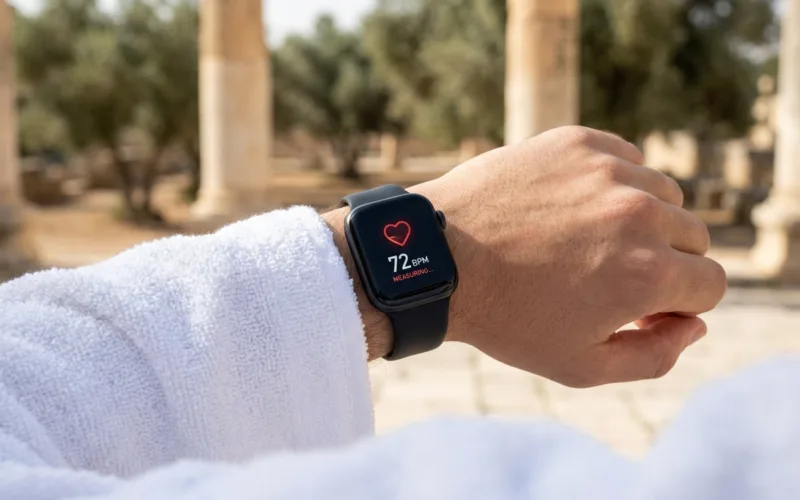
The Madinah Health Cluster has introduced smart watches for pilgrims with heart conditions during Hajj 2026, allowing medical teams to track their health continuously and intervene quickly when needed.
The goal is to help pilgrims complete their rituals safely while remaining under active medical supervision.
Each device tracks a set of vital indicators without interruption: heart rate, electrocardiogram (ECG) readings, blood oxygen levels, blood pressure, physical movement, and the wearer’s general condition.
The data is sent directly from the device to a connected digital system, giving medical staff a live picture of each patient’s status.
Health data collected by the watches feeds into an integrated digital monitoring network linked to virtual clinics and digital observation rooms.
This setup allows medical teams to spot changes in a patient’s condition and step in quickly — without the pilgrim needing to travel to a facility or disrupt their worship.
The programme operates under the name “Rafiq Rihltak Bil-Hajj” — Your Hajj Journey Companion — and is a joint initiative between the Madinah Health Cluster and Seha Virtual Hospital.
It forms part of the cluster’s wider push to use modern technology and digital tools during Hajj 2026 to raise the standard of healthcare delivered to pilgrims and improve their overall experience.
These smart watches are not available for individual purchase. They are issued by the Madinah Health Cluster to registered heart patients as part of the Seha Virtual Hospital programme.


 WhatsApp Channel
 ChatGPT
 Instagram
 Facebook
 X (Twitter)
 Claude
 Ask Gemini AI
 Ask Grok AI
Support the officially authentic Islamic website.
Support our mission to spread Islamic knowledge. Your donation helps our volunteer writers and infrastructure. Contribute now.

